So you might have heard about the Viking conquests, and seen the many (sometimes ridiculous) depictions of them in pop culture, but do you know where they came from originally? Let’s dive into what we know of the origin of Vikings!
Where did the Vikings come from?
The Norse seafarers known as Vikings originated from what we today call Scandinavia (Denmark, Norway, and Sweden). Most Vikings likely came from modern-day Denmark, with ~500 000 people estimated to live there during the Viking Age, followed by about 175 000 in Norway and 100 000 in Sweden.
Individual Viking raiding parties and naval expeditions likely also included people from outside Scandinavia. A 2020 study of 442 Viking skeletons published in Nature showed some examples with Irish, Scottish, southern European and Asian origins buried alongside Scandinavians (and with accompanying ceremonial objects and methods signalling “Viking” status).
The same study shows that Danish and Norwegian Vikings mainly went west (Britain, France, Ireland, Faroe Islands, Iceland), while the Swedish Vikings (called Vagyars or Rus) mainly went east (the Baltics, Russia, the Black Sea, Constantinople).
Okay, so maybe you already knew that the Vikings hailed from Scandinavia, but before that then?
Historically accurate and designed in Scandinavia
Rune Circle Metal Wall Art
Metal wall art featuring and inspired by designs found in archeological sites from Viking Age Scandinavia. Free shipping worldwide.
Let’s dig a bit deeper and look at where the Scandinavian people — or Norsemen as you would call them at the time — from the beginning of the Viking Age originated from.
The people living in Scandinavia during the Viking Age originated from multiple places in multiple waves;
~12 000 BCE: hunter-gatherers came from central Europe and modern-day Russia
~4 000 BCE: farmers from Anatolia and Syria were added to the mix
~2 800 BCE: steppe herders arrived from the Black Sea
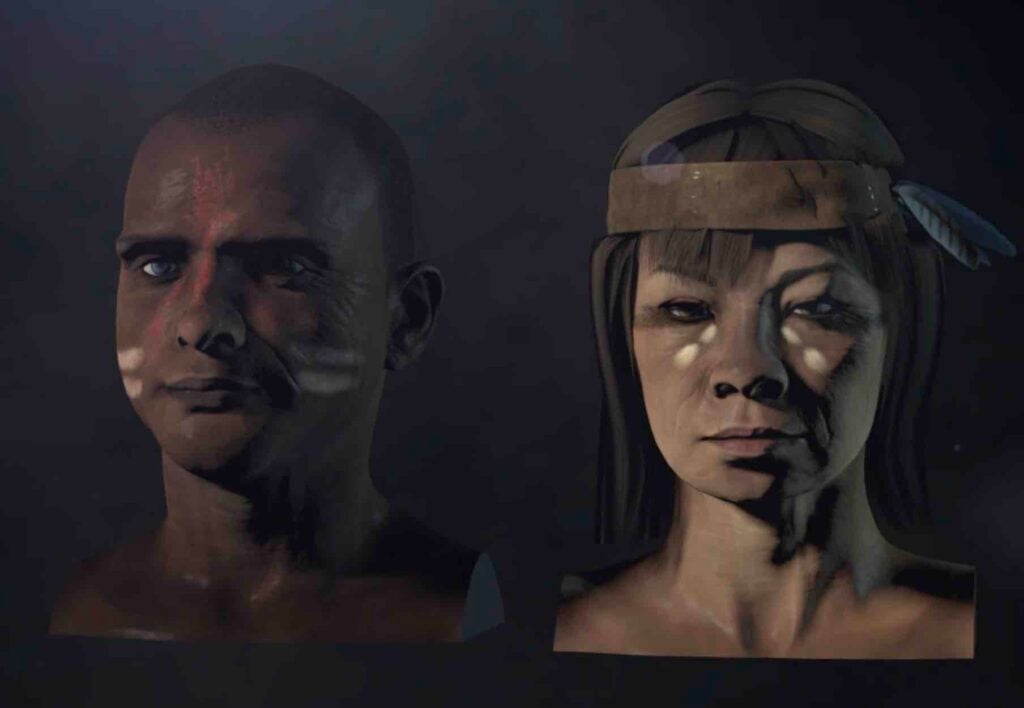
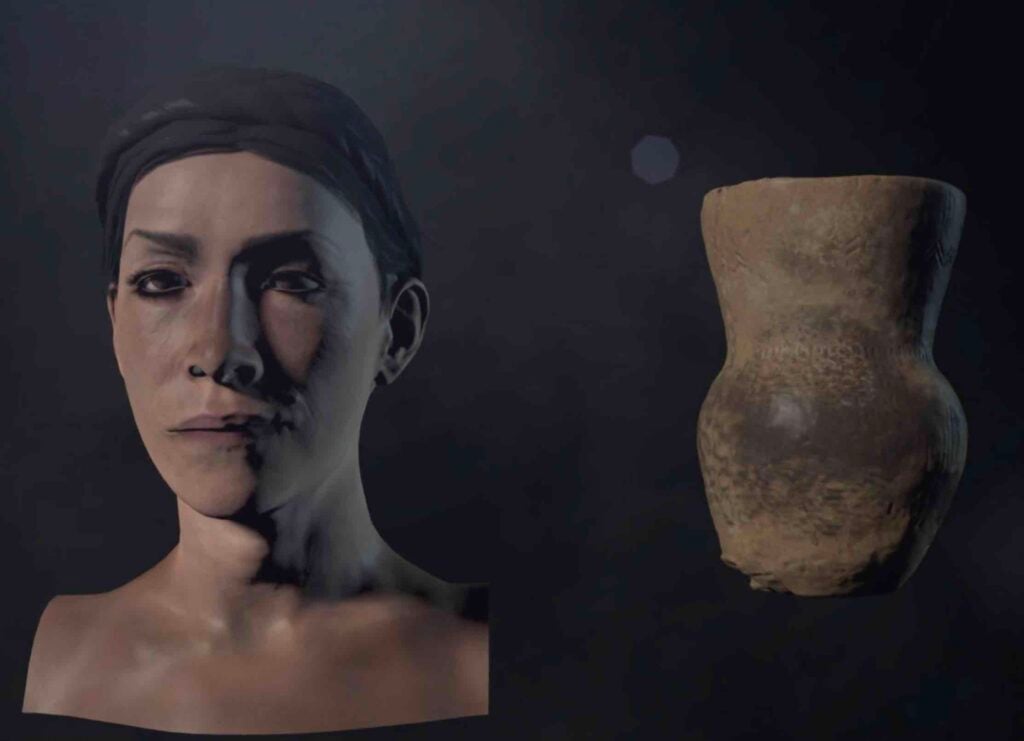
This is what the hunter-gatherers (left) and farmers (right) who came to Scandinavia in the first few migration waves looked like.
In other words, the Scandinavian region was the target of multiple immigration waves over a period of tens of thousands of years before the Viking Age.
Now, let’s take a closer look at exactly who the Vikings’ ancestors were, when they came, and where they came from:
14 000 years ago
The First Scandinavians
The first inhabitants of the Scandinavian peninsula came from the south (a people known as the Western Hunter-Gatherers), later joined by migrants from the east (known as Eastern Hunter-Gatherers)
6 000 years ago
The First Farmers Come to Scandinavia
The first farmers—originating from Anatolia and Syria and commonly called Early European Farmers—start arriving to Scandinavia with powerful new knowledge and tools. They competed and fused with the original inhabitants in the battle for access to the hunting and fishing grounds, which were both still a big part of the farmer’s diet.
4 800 years ago
Steppe Herders From The East
Another wave of migrants came into Scandinavia from the Russian steppes, originating from the northern shores of the Black sea and commonly called the Western Steppe Herders.
4 300 years ago
The Battle Axe Culture
The so-called Battle Axe culture group emerged out of the Scandinavian Hunter-Gatherers and Western Steppe Herders, establishing itself and flourishing in what today is Denmark, Sweden, and Norway.
The new culture is thought to have been a bit more individualistic (with single graves instead of in groups as earlier cultures), and was known for how their men were buried with their big boat-shaped battle axes in ways that resemble Germanic culture more and more.
They likely brought Indo-European languages and culture to the Scandinavian region
3 700 years ago
The Nordic Bronze Age
The bronze age Scandinavians have been found to be extensive traders of amber and various metals. Through this trade the Nordic people developed an unusual expertise in metalworking.
Based on metal deposit findings from that period, the Nordic Bronze Age culture seems to have been the richest culture in Europe.
During this time shipbuilding and seafaring becomes a substantial part of Scandinavian culture.
The Nordic Bronze Age people are thought to be the ancestors of all Germanic people.
2 600 years ago (around 600 BCE)
The First Germanic People
The Nordic Bronze Age people eventually spread their influence south, and became what is known as the Germanic people of southern Scandinavia and northern Germany.
The Germanic and Scandinavian culture during this time was defined by four main characteristics that would last for more than 1100 years (until the end of the Viking Age):
1) Everyday life was very violent, and warriors were shaped early. 2) A materialistic culture was formed via expansive trading routes. 3) There was a clear hierarchy in society as a whole 4) The different Germanic tribes told and believed in their own versions of a Proto-Germanic folklore and mythology (which includes Norse Mythology).
It is estimated that around 15% of the total population in this region was killed in violent altercations during this time period, according to Harvard scientist Steven Pinker.
2 500 years ago (around 500 BCE)
Climate Changes, War, and Iron Brings About Isolation and Migration
Most scholars agree that drastic climate changes had a brutal impact on the Scandinavian population during the early Iron Age, that was defined by warfare, hunger, and poverty in the region.
Due to the many wars between Celtic tribes and Mediterreanean kingdoms on the main continent, trade and influence from the rest of Europe happens at a much lower rate during this time, with the majority of commerce happening within the Nordic region.
The discovery of iron—which was plentiful in Northern Europe—changes everything for the Iron Age Scandinavians. They are no longer dependant on importing bronze for weapons and tools, but can now start producing them en masse.
A wave of Germanic tribes migrate South and East from Scandinavia during this time, landing in Poland and ultimately ending up in modern-day Czechia, Slovakia, Hungary, and Romania a few hundred years later.
2450 years ago (around 450 BCE)
The Germanic Tribes Thrive and Expand South (The Jastorf Culture is Born)
Despire being cut off from most of the other European cultures at the time, the Proto-Germanic population in southern Scandinavia (centered around southern Jutland) seems to be thriving, with a growing population observed alongside new technologies and economic development.
Most scholars agree that the Proto-Germanic culture that is centered around southern Jutland (southern Scandinavia) starts expanding around the same time as they find iron (5th century CE), and eventually splits up into a Nordic Iron Age culture (southern Scandinavia including most of Denmark) and the Jastorf culture (southern Denmark and northern Lower Saxony).
According to archeaological evidence, the Jastorf Culture shares many cultural aspects with their Scandinavian relatives, but starts coming into contact with continental Celtic tribes to a larger extent. This results in both cultural influences as well as expansion into formerly Celtic lands by the Germanic tribes.
2 350 years ago (around 330 BCE)
Greek Traveler Pytheas Visits Scandinavia
While Alexander the Great is conquering Egypt and Persia on the opposite edge of the known world, the Greek traveler Pythea of Marseille make it to a place he calls Thule, where he describes what could be one of the first written accord of North-Germanic culture.
He describes a place were the sun never slept, north of the Arctic Circle, where the night was very short, only a few hours. He depicts the land as fertile, “rich in fruits that were ripe late in the year, and the people there made a beverage from honey. They threshed the grain in large houses, because of the cloudy and frequent rainy weather. In the spring they drove the cattle up into the mountains for summer work and stayed there all summer”.
Though he calls the land Thule, scholars have matched his descriptions with western Norway, and so agree that this is likely were he landed with his ship.
2100 years ago (around 100 BCE)
The Germanic Tribes Clash With the Roman Empire
Gaius Marius and Julius Caesar were the two first Roman generals to be forced to defend the edges of the Roman Empire from Germanic attacks, but certainly not the last.
In the centuries to come, Germanic tribes would keep testing the Roman defenses in their push southwards, with multiple documented wars between the two.
Celtic tribes are also pushed out of Central and Eastern Europe by different Germanic peoples, who are settling down in numbers all across the northern borders of the mighty Roman Empire.
1 900 years ago (166 CE)
The Marcomannic and Gothic Wars
Facing the might of the Roman Empire, Germanic tribes started forming federations and military alliances in ways they hadn’t previously.
This was especially evident in the Marcomannic wars (166-180 CE) and the Gothic wars (238-270 CE), which both were marked by many different tribes coming together against the much larger neighboring empire, and both by Germanic armies making it as far as Northern Italy.
1 700 years ago (around 300 CE)
The Great Germanic Migration Begins
Around the 4th century CE, tribes along the borders of the Roman Empire, such as the Franks, Goths, Alemanni, Alans, Huns, the early Slavs, Magyars, and Bulgars start massive migrations within or into the former Western Roman Empire, and across Eastern Europe.
1 600 years ago (around 400 CE)
Angles, Saxons, and Jutes Invades and Settles in Britain
The Roman rule of Brittania comes to an end around 410 CE, and Germanic tribes along the North Sea coast do not waste any time to pounce on this opportunity.
Many Anglo-Saxon warriors were already present in Britain as hired mercenaries, and new waves of Germanic people come flushing in to the island, ultimately forming new Anglo-Saxon kingdoms were Rome once ruled.
These kingdoms would be the beginning of what we call England today.
1 540 years ago (476 CE)
The Fall of the Roman Empire, and Rise of the Germanic Kingdoms
The massive migrations of Germanic and Slavic tribes throughout Europe in the 5th century ultimately contributes to that fall of the Western Roman Empire in 476 CE.
In its stead, multiple Germanic Kingdoms fill the power vacuum around the European continent.
These include the Frankish, Ostrogothic, Visigothic, Vandal, Suebi, Burgundian, and Anglo-Saxon kingdoms.
1 500 years ago (around 500 CE)
The Frankish Kingdom Expands
Tribes such as the Marcomanni and the Vandals who once lived on the edges of the Roman empire go on to new lands within the old empire, and in their place new Germanic tribes such as the Alamanni, Thuringians, Herules, Goths, and Gepids settle in Gaul, western and southern Germany, Austria, Czechia, Slovakia, Hungary and Romania.
Around this time, King Clovis I unites the Frankish tribes under one ruler for the first time, and starts a rapid Frankish expansion that would ultimately end with most of western, central and southern Europe under Frankish rule.
He is considered the first Merovingian ruler (known for their long hair), and would take control over most of the former Roman provinces of Gaul and Germania magna in his lifetime.
1 400 years ago (around 600 CE)
Germanic Seafaring and Conscription
Seafarers from the Scandinavian region start going on bolder and bolder naval expeditions around the European continent.
Trade with the continent grows again as Germanic kingdoms rule the former Roman lands, and the first conscriptions among villages in the Scandinavian kingdoms start.
This signals the beginning of more and more small groups of trained and organized warriors, which would later be referred to as Vikings.
1 300 years ago (around 700 CE)
The First Vikings
The Viking Age begins around 700 CE and really gets going with the sacking of Linidisfarne on June 8th, 793.
The Norse start pillaging, raiding and settling across Europe at an increasing rate, and the seafaring Norsemen experience an age of rapid expansion and bold exploration.
1 270 years ago (751 CE)
Charlemagne and the Carolingian Dynasty Takes Over Most of Europe
After almost 300 years of Merovingian rule in the Frankish Kingdom, Charlemagne is crowned Emperor of the Frankish Empire, a vast empire spanning across most of the western and central European areas that had previously been under Roman control.
The Empire was eventually split up in Western Francia (predecessor to modern-day France), Middle Francia (predecessor to modern-day Italy), and East Francia (predecessor to modern-day Germany).
It would also resurface as the Holy Roman Empire (though not under the Carolingian dynasty) in the middle ages.
Want to learn more about Norse vs. Nordic vs. Norwegian? I’ve written an article that walks you through what exactly the different terms mean and you can read it here or through the link below.
So now that you have a better idea of where the Vikings originated from, let’s move on to how many of them there actually were at the time!
How Many Vikings Were There?
It is estimated that there were about 783 000 Norse people when the Viking Age hit its peak, split up in the different Nordic regions per the table below:
As we can see, most of the Norse/Vikings lived within the borders of modern-day Denmark during the Viking Age, with a population of around half a million.
Around the same time, there were around 150 000—200 000 people in Norway, and about 100 000 in Sweden.
Adding in the colonies of Iceland and Faroe Islands we land at an estimated total Norse population of around 783 000 people at the height of the Viking Age.
So we know where they came from, and how many of them there were — but why did they end up leaving Scandinavia? Let’s find out.
Why Did the Vikings Leave To Explore (and Raid)?
Historians talk about three main reasons why some Norse people left Scandinavia in search of adventure and riches:
Climate change: An exceptionally cold period in the Nordics led to low yields and starvation
Ship technology: The Norse made ships that could traverse the rough open seas
Norse religion: The promise of Valhalla and belief in a destined future led to daring voyages
In the beginning the naval expeditions were mainly ones of curiosity, where young men would plant their crops in Scandinavia during spring, and then go out on bolder and bolder summer adventures while they were waiting for harvesting season in fall (when they’d return).
Eventually, some Norse would colonize land with no or very small populations present, such as Shetland Islands, Orkney Islands, Faroe Islands, and Iceland.
Often just working the land wouldn’t be enough to get by, and in those cases the trained and organized Norse warriors were prone to go out plundering their surroundings, i.e. the British Isles and the likes.
Do Vikings Still Exist?
In a strictly historical sense, there are no Vikings alive today. The Norse descendants are alive though: the Nordic people of Northern Europe.
There are also Viking reenactment communities trying to live the Norse way of life in our modern world, and styling themselves “Modern Vikings” (there were around 3—4 000 “Modern Vikings” in 2001).
In southern Sweden for example, there are a number of associations that try to bring the Viking age to life, some of them tied to a historical object such as Fotevikens Museum where you can walk around a reconstructed Viking village with 23 buildings and a reconstructed Viking longship based on the actual longship found the nearby Foteviken bay.
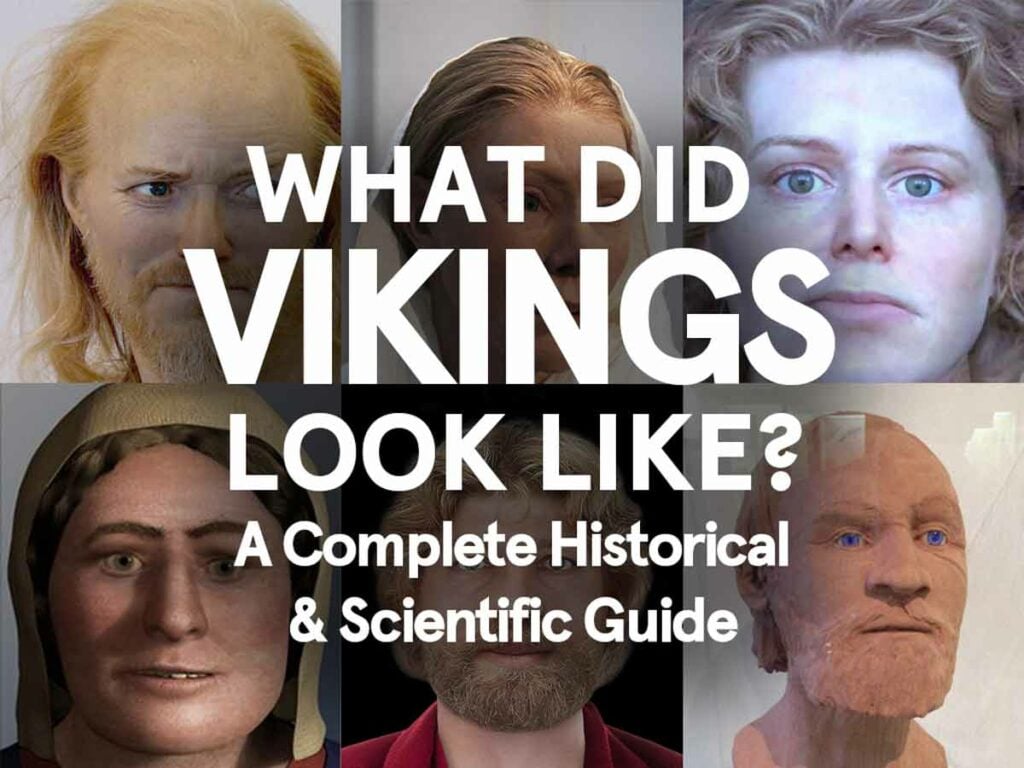
Recent advancements in DNA analysis tech have led to extraordinary insight into how Vikings looked, from hair and eye color to size and ancestry. Scientists are now able to create eerily realistic facial reconstructions, getting us closer than ever to find out who they were and what the Vikings looked like. Read Article Now
Quick Answers
Were Vikings Germanic?
The Norse and therefore Vikings were considered North Germanic, and the Old Norse language is a North Germanic language.
Furthermore, all Germanic people are thought to hail from the Nordic Bronze Age people who lived in Scandinavia around 3 700 years ago (2 400 years before the Viking Age began).
Where Did the Germanic Tribes Come From?
All Germanic people are thought to have originated from the shipbuilding and seafaring Nordic Bronze Age people who lived in Scandinavia around 3 700 years ago. The Nordic Bronze age culture was the richest in Europe at the time (based on metal deposit findings), and eventually spread south to northern Germany/Saxony.
Subscribe to our newsletter to get the latest Nordic resources, insights, tips, hidden gems, and much more.
By subscribing, you agree to get emails from Nordic Perspective. We respect your privacy and you can unsubscribe any time.
By Karl Andersson
As a native Swede with a Finnish mother, Karl identifies as both Nordic and Scandinavian. He left Sweden at 19 to explore the world, and stayed abroad for almost 8 years—during which he backpacked, worked every job there was, earned a degree from UC Berkeley, and met the future mother of his children. He ultimately returned to his native Malmö with his love, where they now have 3 Swedish-American boys eager to explore the world.
Hi Pieter! It is believed the Lombards/Langobards originated from southern Scandinavia, just like the Vikings, so if nothing else they likely have common ancestors.
The Lombards migrated south through Europe via land during the great Germanic migrations, eventually reaching Italy where they would rule for hundreds of years. The Norse Vikings however did not leave Scandinavia just yet, but as you know developed quite the travel bug several hundred years later when they set out to explore, raid, and rule large parts of Europe.
What are your thoughts on the study done on Vikings that tell a different story about their origins being from the Mediterranean and Asia? Not blond hair and blue eyes, but darker complexions and hair. Just google search, “Vikings not blond” and a link should come up for the article posted in the magazine NorwayToday
The study I think you are referring to is the one published in Nature magazine in 2020, and it’s fascinating for sure! However, as far as I can tell from the data, the findings of the study were not that Vikings weren’t blonde/blue-eyed, or that Vikings came from the Mediterranean and Asia instead of Scandinavia.
Here’s what it did show according to the authors of the study:
1) It showed that the 442 Viking skeletons they analyzed were more likely to be dark-haired than modern-day Scandinavians are (who are mostly light-haired) — not that most of them were dark-haired.
2) It also showed that there were members of the Viking bands that hailed from other places than Scandinavia (either as a result of trade or conquest) — but the vast majority still came from Scandinavia (and the Viking expeditions definitely originated from Scandinavia according to the authors).
One thing is for sure: studies such as this one and others in recent years have enabled us to see a more data and science-based picture of who the Vikings actually were and how they actually looked like, and I’m intrigued to see what else we’ll find out in the years to come!
Greetings!
I came across this amazing webpage simply browsing for hairstyles. I really adore your site that is rich with resources and extremely interesting topics. I am of Nordic, Slavic and Scottish heritage so of course I love to read the information you have and learn more and more and I want to subscribe to your newsletter… but I have not found the link. Please direct me to it)). Thank you kindly!
– Jennifer
Hello Jennifer, and welcome!
Thank you for the kind words, and I hope you’ll find lots of useful and interesting information on your quest. You can subscribe to the newsletter at the very bottom of this page (on the left hand side), or by going here: https://shop.nordicperspective.com/get-a-free-guide-to-the-nordics
These are often hypotheses that cannot be confirmed with certainty. These are not accurate and no one really knows where the ancestors of the Nordic Germans appeared several thousand years ago! Why are none of the people in the world like them? They have a dolichocephalic skull with low melatonin, flaxen hair and blue eyes. They had strong sailors and kings who were able to leave their culture in the world today (Western and Northern Europe and North America, Canada, Australia) who knows who they really are? Maybe they are the people of the lost continent of Atlantis. Beautiful and strange and intelligent people.

 Visit Our Shop
 Scandinavian, Viking & Germanic Links Explained (With Maps)
 How the Dutch & Scandinavians Are Connected (Complete Guide)
 Nordic vs. Germanic vs. Celtic: Differences & Links Explained (+ Maps)
 The Germanic Tribes: History, Migrations, Timeline & Legacy
Hi. Are the vikings and the lombards related?
Hi Pieter! It is believed the Lombards/Langobards originated from southern Scandinavia, just like the Vikings, so if nothing else they likely have common ancestors.
The Lombards migrated south through Europe via land during the great Germanic migrations, eventually reaching Italy where they would rule for hundreds of years. The Norse Vikings however did not leave Scandinavia just yet, but as you know developed quite the travel bug several hundred years later when they set out to explore, raid, and rule large parts of Europe.
What are your thoughts on the study done on Vikings that tell a different story about their origins being from the Mediterranean and Asia? Not blond hair and blue eyes, but darker complexions and hair. Just google search, “Vikings not blond” and a link should come up for the article posted in the magazine NorwayToday
Hi Rhiannon!
The study I think you are referring to is the one published in Nature magazine in 2020, and it’s fascinating for sure! However, as far as I can tell from the data, the findings of the study were not that Vikings weren’t blonde/blue-eyed, or that Vikings came from the Mediterranean and Asia instead of Scandinavia.
Here’s what it did show according to the authors of the study:
1) It showed that the 442 Viking skeletons they analyzed were more likely to be dark-haired than modern-day Scandinavians are (who are mostly light-haired) — not that most of them were dark-haired.
2) It also showed that there were members of the Viking bands that hailed from other places than Scandinavia (either as a result of trade or conquest) — but the vast majority still came from Scandinavia (and the Viking expeditions definitely originated from Scandinavia according to the authors).
I’ve written more about this study, and how Vikings actually looked like specifically here if you’re interested: https://nordicperspective.com/history/vikings/how-vikings-actually-looked-complete-guide#what-hair-colors-did-vikings-mostly-have
One thing is for sure: studies such as this one and others in recent years have enabled us to see a more data and science-based picture of who the Vikings actually were and how they actually looked like, and I’m intrigued to see what else we’ll find out in the years to come!
Greetings!
I came across this amazing webpage simply browsing for hairstyles. I really adore your site that is rich with resources and extremely interesting topics. I am of Nordic, Slavic and Scottish heritage so of course I love to read the information you have and learn more and more and I want to subscribe to your newsletter… but I have not found the link. Please direct me to it)). Thank you kindly!
– Jennifer
Hello Jennifer, and welcome!
Thank you for the kind words, and I hope you’ll find lots of useful and interesting information on your quest. You can subscribe to the newsletter at the very bottom of this page (on the left hand side), or by going here: https://shop.nordicperspective.com/get-a-free-guide-to-the-nordics
These are often hypotheses that cannot be confirmed with certainty. These are not accurate and no one really knows where the ancestors of the Nordic Germans appeared several thousand years ago! Why are none of the people in the world like them? They have a dolichocephalic skull with low melatonin, flaxen hair and blue eyes. They had strong sailors and kings who were able to leave their culture in the world today (Western and Northern Europe and North America, Canada, Australia) who knows who they really are? Maybe they are the people of the lost continent of Atlantis. Beautiful and strange and intelligent people.